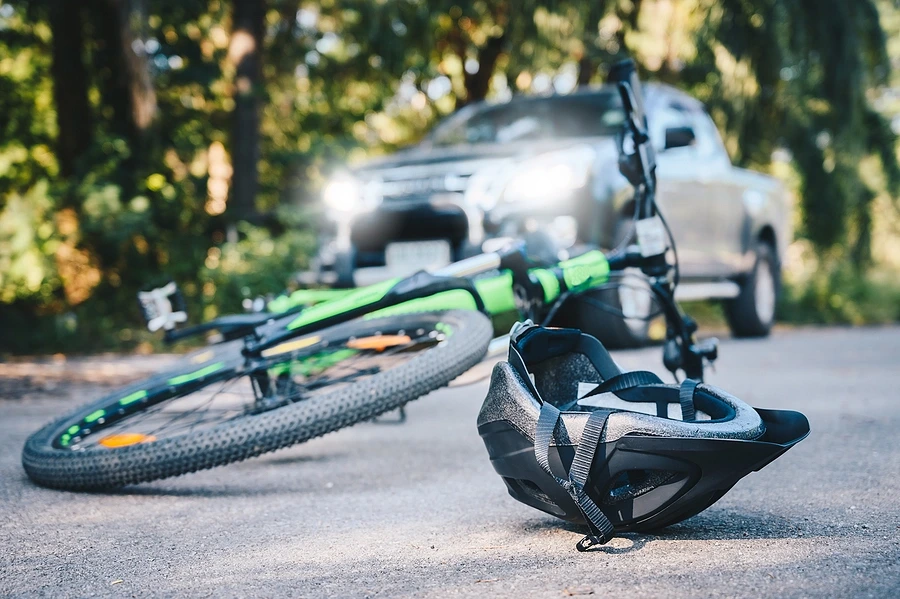
A driver who passes a cyclist too closely can cause a crash in an instant, whether by striking the rider or by forcing the rider off the road. OSP Motorcycle & Bicycle Accident Lawyers represent cyclists who were hurt by careless passing and help them understand the claims that may be available. If you are looking for an Ohio Unsafe Passing Bicycle Crashes Lawyer, call 330-892-9117 to schedule a free consultation. Cyclists on the rolling two-lane roads of Holmes County regularly share space with cars, trucks, and horse-drawn buggies. Unsafe passing is one of several crash types that fall under broader bicycle accident claims across Ohio, and it often leaves riders with questions about how to prove what happened. We can help you find the answers.
How an Ohio Unsafe Passing Bicycle Crashes Lawyer Builds Your Claim
Passing crashes can be difficult to document because they happen quickly, and the driver may not stop. Building a strong claim usually depends on careful investigation. The topics below describe the main parts of that work.
What Makes a Pass Unsafe
A pass may be unsafe for several reasons beyond simple closeness. Drivers sometimes pass on a hill or curve where they cannot see oncoming traffic, then swerve back toward the cyclist to avoid a head-on collision. Others pass and immediately turn right or slow down in front of the rider.
Each of these behaviors puts the cyclist in danger even when the driver believes the maneuver was harmless. A driver has a duty to wait until the pass can be completed safely and without interfering with the rider. When impatience leads a driver to ignore that duty, the driver may be responsible for the resulting injuries.
Crashes Without Direct Contact
Some of the most serious passing crashes involve no contact between the vehicle and the bicycle. A rider who is startled or pushed by the air from a passing truck may lose balance and fall. A rider may also swerve onto a gravel shoulder or into a ditch to avoid being struck.
Insurers sometimes argue that a no-contact crash was the cyclist’s own fault. However, a driver can still be responsible when an unsafe maneuver forces the rider into a dangerous position. Witnesses and video are often especially valuable in these cases because physical evidence on the vehicle may be limited.
Proving How Close the Driver Came
Establishing the passing distance is often central to an unsafe passing claim. Rear-facing bike cameras and handlebar cameras have become common among cyclists, and their footage can show exactly how much room the driver provided. Some cycling devices also record speed, location, and the moment of a sudden stop.
When video is not available, other evidence may help. The width of the lane, the location of debris, and marks on the road can indicate where the bicycle was positioned. Statements from other riders in a group or from drivers who were following may also confirm how the pass unfolded.
Identifying a Driver Who Did Not Stop
Drivers who make a close pass sometimes continue on without realizing, or without admitting, that a cyclist went down. When the driver leaves, the rider may have little information beyond a vehicle color or partial plate number. Prompt action can make a significant difference in locating the driver.
Reporting the crash to police right away creates an official record and may lead to an investigation. Cameras at homes and businesses along the route may have captured the vehicle. If the driver cannot be identified, the cyclist’s own uninsured motorist coverage may apply, depending on the terms of the policy.
Passing Laws and Road Conditions Across the State
Ohio has adopted specific rules for passing bicycles, and road conditions throughout the state affect how those rules play out. Understanding both helps explain how fault is evaluated. These are the issues that come up most often.
Ohio’s Minimum Passing Distance
The general passing statute, Ohio Revised Code Section 4511.27, requires drivers to keep at least three feet of clearance when overtaking a bicycle. The rule applies on city streets, suburban roads, and rural highways alike. A driver who cannot provide that clearance must wait behind the cyclist until a safe opportunity arises.
Some drivers mistakenly believe the rule applies only when there is a bike lane. In fact, the duty applies whenever a motorist overtakes a cyclist on the roadway. Showing that a driver ignored this requirement can be an important part of proving negligence.
Passing Slower Vehicles in No-Passing Zones
Ohio law includes an exception that may allow a driver to pass a slow-moving vehicle, such as a bicycle, in a no-passing zone when it is safe to do so. Under Ohio Revised Code Section 4511.31, this exception applies only when the vehicle being passed is traveling at less than half the posted speed limit and the pass can be completed safely. The exception does not permit a driver to pass when oncoming traffic or limited visibility creates a hazard.
This rule gives drivers a legal way to provide more room to cyclists, but it does not excuse an unsafe maneuver. A driver who crosses the center line on a blind curve and then cuts back toward the rider may still be found at fault. The specific conditions at the time of the pass will shape how the rule applies.
Group Rides on Two-Lane Roads
Many Ohio cyclists ride in groups on weekend routes through farmland and small towns. Ohio law allows cyclists to ride two abreast in a single lane, and groups often stretch out along the road. Drivers approaching a group may become impatient and attempt to pass several riders at once.
Passing a long line of cyclists takes more time and distance than passing a single rider. When a driver misjudges that distance, the riders at the front of the group may be at the greatest risk. Statements from other riders can provide strong support for a claim in these situations.
Scenic Routes and Seasonal Traffic
Routes such as the Lake Erie Coastal Ohio Trail, a designated scenic byway, draw both cyclists and sightseeing drivers during warmer months. Drivers who are looking at the scenery or searching for a destination may not notice a cyclist ahead until the last moment. Summer traffic around popular lakeshore towns can make passing situations more crowded.
Agricultural equipment adds another factor on rural roads during planting and harvest seasons. Drivers stuck behind slow farm machinery may pass aggressively once they have an opening, sometimes without seeing a cyclist farther ahead. These conditions can help explain how a crash happened and why a driver should have exercised more caution.
Speak With an Ohio Unsafe Passing Bicycle Crashes Lawyer
At OSP Motorcycle & Bicycle Accident Lawyers, we believe every cyclist deserves the space the law requires. As Ohio unsafe passing bicycle crashes attorneys, we take each rider’s account seriously and work to gather the evidence that supports it. Whether you were run off a county road near Wooster or struck on a busy suburban street outside Columbus, we can explain your options and the deadlines that may apply. Learn more about our Ohio bicycle accident lawyers online, and call 330-892-9117 to schedule your free consultation. We are here to answer your questions and help you decide what step comes next for you.