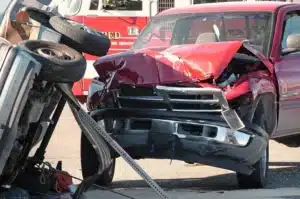
Intersection crashes often turn into a dispute over a single question: who had the right of way? A driver may insist the light was yellow, that the motorcycle came out of nowhere, or that the rider was going too fast. Without solid evidence, these competing accounts can leave an injured rider struggling to prove what really happened. Ohio law sets clear rules about who must yield at intersections, but applying those rules depends on facts that must be established. Knowing what evidence can prove a failure to yield helps riders protect their claims. These issues are central to Ohio left-turn and intersection motorcycle crash claims. This post explains the relevant yield rules and the types of evidence that often make the difference.
The Yield Rules That Apply at Intersections
Proving that a driver failed to yield starts with identifying the rule that applied. Different intersections follow different rules depending on their controls. These are the situations that come up most often.
Stop Signs and Yield Signs
Under Ohio Revised Code Section 4511.43, a driver facing a stop sign must stop and then yield to vehicles in the intersection or approaching closely enough to be an immediate hazard. A driver facing a yield sign must slow down and yield in the same way. A motorcycle traveling on the through road is entitled to that protection.
Many crashes occur when a driver stops properly but then pulls out without looking carefully. Stopping is only part of the duty. The driver must also wait until it is safe to proceed.
Left Turns at Intersections
Ohio law requires a driver turning left to yield to oncoming vehicles that are within the intersection or close enough to be an immediate hazard. This rule applies at signalized and unsignalized intersections alike. A green light does not give a left-turning driver the right to turn in front of oncoming traffic unless a protected arrow is displayed.
The key factual question is often whether the motorcycle was close enough to be a hazard when the driver began the turn. Evidence about distance, speed, and timing helps answer that question. Even a few seconds of difference can matter.
Uncontrolled Intersections
Some intersections have no signs or signals. Under Ohio Revised Code Section 4511.41, when two vehicles approach such an intersection at about the same time, the driver on the left generally must yield to the driver on the right. These intersections are common in residential neighborhoods and rural areas.
Disputes at uncontrolled intersections often focus on which vehicle arrived first. Witness accounts and damage patterns can help clarify the sequence. The positions of the vehicles after impact may also offer clues.
Evidence That Can Prove a Failure to Yield
Once the applicable rule is identified, evidence must show that the driver broke it. Strong claims usually combine several kinds of proof. These sources are among the most useful.
Video Footage
Video is often the most persuasive form of evidence in an intersection crash. Traffic cameras, business security systems, doorbell cameras, and dashcams may all capture the collision. Footage can show the signal phase, the timing of the turn, and the position of each vehicle.
Many systems automatically delete footage within days. Requests to preserve video should be made as quickly as possible. Riders who use helmet cameras should save their own recordings immediately.
Witness Statements
People waiting at the intersection, walking nearby, or driving behind the vehicles may have a clear view of the crash. Independent witnesses can be especially valuable because they have no stake in the outcome. Their accounts can confirm which driver had the green light or arrived first.
Witness memories fade over time, so prompt contact is important. Written or recorded statements taken soon after the crash tend to be more reliable. Police reports often list witnesses who spoke with officers at the scene.
Physical Evidence and Vehicle Data
Damage to the vehicles, skid marks, and debris can reveal how the crash unfolded. The location of impact on each vehicle often shows the angle of the collision. Measurements of the intersection can help establish sight lines and distances.
Many modern vehicles contain event data recorders that capture speed, braking, and other information in the moments before a crash. This data can help show whether the turning driver hesitated or accelerated. Obtaining it may require prompt action before the vehicle is repaired or scrapped.
Putting the Evidence Together
Individual pieces of evidence are most powerful when they work together. A clear, consistent account helps insurers and courts understand what happened. These steps help build that account.
Signal Timing and Crash Reconstruction
At signalized intersections, timing records from the traffic agency may show how long each signal phase lasted. When combined with video or witness accounts, these records can help establish which direction had the right of way. They are especially useful when drivers disagree about the color of the light.
In complex cases, a reconstruction professional may analyze all of the evidence to explain the sequence of events. Their analysis can estimate speeds, distances, and reaction times. This work can be important when the other side disputes the rider’s account.
The Police Report and Citations
The police report often records the officer’s observations and any citations issued. A citation for failure to yield can support a rider’s claim, though it is not required. The report may also contain errors that need to be corrected with other evidence.
Reviewing the report carefully is an important early step. Officers may not have had access to video or all witnesses at the scene. Additional evidence gathered later can fill in those gaps.
Building a Clear Account of Your Crash
We know how frustrating it is when a driver who failed to yield tries to shift the blame. At OSP Motorcycle & Bicycle Accident Lawyers, we gather video, witness accounts, and physical evidence to help riders show exactly what happened at the intersection. You can learn more about our Ohio motorcycle accident lawyers on our website. If you were hurt in an intersection crash, we would be glad to talk with you during a free consultation and help you understand the evidence that may support your claim. There is no obligation, and we are ready to answer your questions whenever you are ready to talk.